What Candidates Want Employers to Get Right About AI

- This article offers a five-step suggested process for incorporating new AI-enabled hiring processes without fuelling misgivings among your talent pool.
- The article also shares findings from a recent Indeed-YouGov survey in the U.S. Among the findings: 40% of employers say AI implementation is a top goal for 2026. But just 13% of jobseekers are enthusiastic about it, while 35% are concerned.
Your AI road map won’t matter if candidates do not trust the route. “Trust among employees and employers is at an all‑time low,” says Indeed Senior Talent Strategy Advisor Kyle M.K. “Jobseekers say, ‘I shall take care of myself because my employer will not.’ Employers say, ‘I will cover my priorities, but I do not trust the economy or market’.
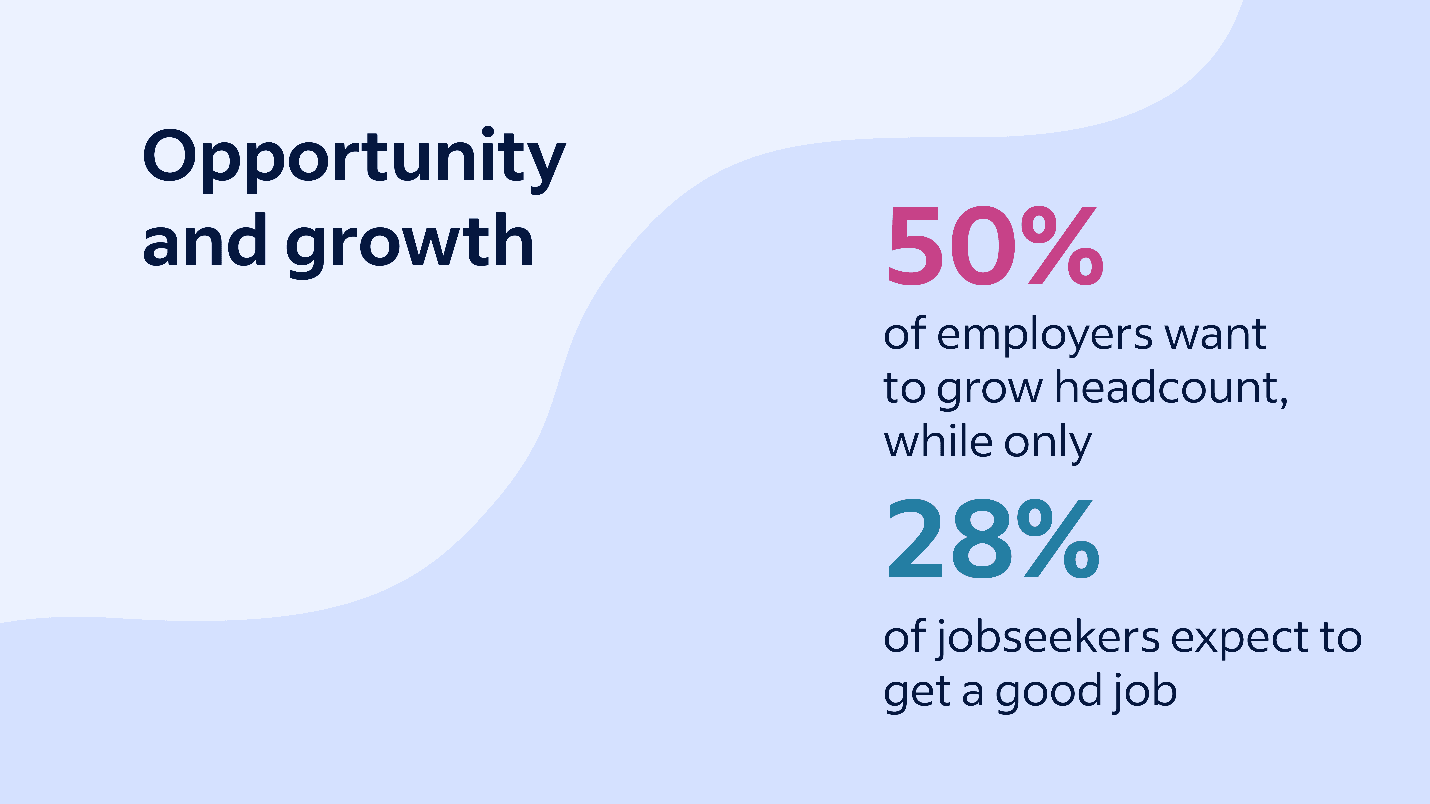
According to a recent U.S. Indeed-YouGov survey,1 this tension is only growing. Employers entered 2026 confident and growth-minded, but their priorities are at odds with their talent pools. Half of employers want to increase headcounts but fewer than a third of jobseekers expect to land a good job. Jobseeker want salary growth (64%), putting pressure on employers’ main goal of cost control (40%). And as organisations ramp up AI implementation (40%), just 13% of jobseekers are excited about it, and a third are concerned.
That is the disconnect slowing hiring today: Leaders are optimising for efficiency, while candidates are prioritising security. ‘In this environment, efficiency without clarity only burns your brand’, says M.K.
In this article, we share a five-point checklist for responsible AI use in hiring.
Ready to get started?
Post a JobResponsible AI Checklist: Alleviate Candidate Fears
‘Employers are focused on AI and costs; jobseekers are worried about dehumanisation and automation’, says M.K. ‘There is a big mismatch in priorities and expectations’.
To address misgivings with any AI implementation, transparency is the name of the game. Here is a quick checklist for clarity with AI in hiring:
✅ Explainable: gives the “why” behind its behaviour
✅ Assistive: helps recruiters prioritise and verify but does not decide for them
✅ Customisable: empowers your team to use their own judgment to monitor results; ask your vendor if they have a Responsible AI team
✅ Embedded: works inside existing workflows to minimise disruption
A 5-Step Process for Transparent Hiring with AI
1) Publish your responsible AI and evaluation principles
- On your careers sites, spell out where AI assists in hiring and what it considers, such as skills, recency or credentials, but make it clear that humans have final say.
- Disclose risk of bias. ‘When 1,000 resumes go through the system, what patterns and risks do we see?’ asks M.K. ‘This helps under-represented candidates build trust’.
2) Define skills-first criteria
- Define must-have vs. nice-to-have criteria and adjacent skills that candidates can learn on the job. State these explicitly in job descriptions and rubrics.
- Lean into scenario-based interview questions or simulation-based assessments mapped to your critical skills and score against standardised rubrics. ‘Today’s employers want people who can move and flow with change rather than push against it’, says M.K.
3) Surface “go/no-go” signals early and set fast‑track rules
- Assistive, explainable signals add efficiency. Set up objective evaluation instructions and automate early resume summaries at the top of your hiring funnel.
- Create fast‑track pathways and use areas of concern to focus early conversations.
4) Create actionable feedback channels
- Provide feedback channels, opt-outs and possible appeal paths for candidates. ‘If a jobseeker is very uncomfortable with AI in the process, allow them to opt out or request an appeal’, advises M.K. ‘It may still be a “no”, but at least they will feel heard’.
5) Reinvest saved time in people, not process
- Keep humans in the loop for all decisions. ‘Trust is built in the moments that can not be automated’, says M.K. ‘When AI handles the mechanics, recruiters should reinvest that time into building community – through deeper conversations, clearer growth paths and transparent human judgment’.
- Use the time saved with automation to have conversations around mutual fit and values alignment, and build visible development paths for new hires.
In 2026, leaders can not have efficiency without trust. Leaders who clarify what matters, standardise how they judge and use assistive AI to remove friction – not people – will win.
1Indeed Survey with YouGov 2025, Total N=2,019 jobseekers and 1,019 employers.
Indeed provides this information as a courtesy to users of this site. Please note that we are not your recruiting or legal advisor, we are not responsible for the content of your job descriptions and none of the information provided herein guarantees performance.
Ready to get started?
Post a JobGet insights and inspiration for the modern world of work
We’ll be in touch soon with the insights and inspiration you need to lead a thriving workforce.
Submit

