When Memes Meet Talent Strategy: Varun Mayya on the Power of Low-Context Communication

- Low-context communication—making your organisation immediately understandable—is now a competitive advantage in talent acquisition
- When expectation matches reality, retention improves: the best hiring isn't about speed, it's about clarity
- AI will automate tasks, not eliminate the need for human judgement and strategic oversight
Ready to get started?
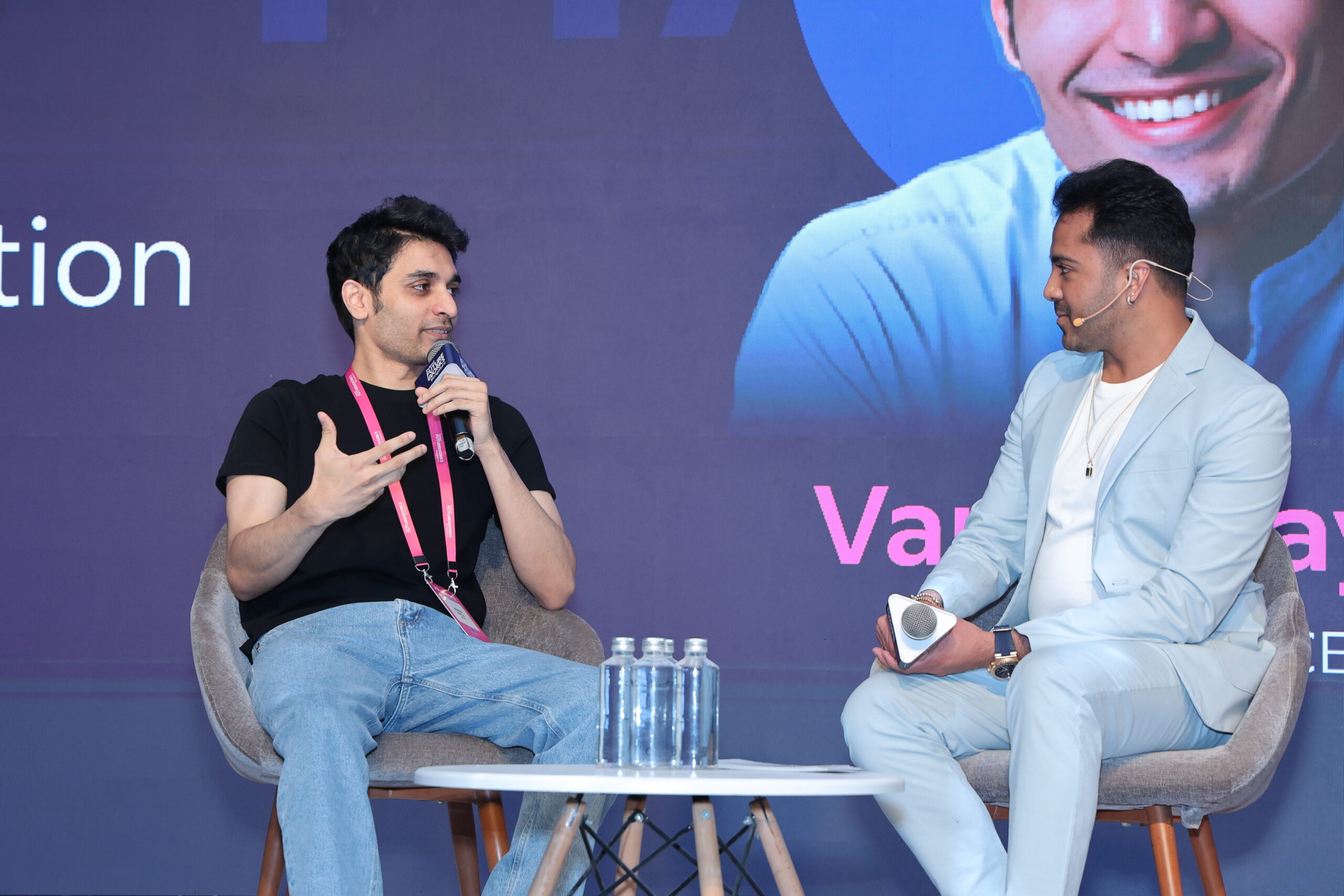
Post a JobThe landscape of work is undergoing a seismic shift, driven by automation and rapidly evolving employee expectations. At Indeed Futureworks Bengaluru the conversation moved beyond the typical platitudes of "digital transformation" to address the visceral, practical challenges of the modern workplace.
Entrepreneur and creator Varun Mayya brought an unconventional but deeply relevant lens to this conversation. Known for building education and content businesses and for his sharp understanding of how young Indians learn, consume content and make career choices, he speaks directly to the behavioural shifts HR now has to design for.
His insights delve into the psychology of modern candidates and the evolving role of AI, providing a toolkit for talent acquisition professionals ready to rethink their approach to the employee experience.
Context: Why This Conversation Matters
Indian enterprises are navigating simultaneous shifts: automation and AI changing task structures, younger employees with very different information diets, and a labour market where skills go out of date faster than job descriptions can be written. HR leadership today has to manage this complexity while still delivering on the basics of hiring, engagement and performance.
Varun's solution centres on what he calls "low-context" communication—a concept borrowed from how ideas spread online.
“Memes allow you to take something people care about, and then drip feed what you want to talk about.”
-Varun Mayya, Entrepreneur and Creator
Think about how memes work. You see an image, instantly recognise the format, and grasp the message in seconds. No explanation needed. No mental effort required. The format itself carries meaning.
Now think about most job descriptions. Dense paragraphs. Corporate jargon. Vague phrases like "dynamic environment" and "self-starter." They require translation. They demand cognitive effort. And in today's market, where top candidates are evaluating multiple opportunities while still employed, cognitive effort is the one thing they don't have to spare.
Vlogs, Transparency and Expectation-Setting in Hiring
Varun shares a powerful example from his own hiring experience: he ran a vlog where “a guy with a camera” simply went around asking employees what they were doing on a daily basis. Someone was “doing some 3D modelling”, another was “editing a video”, another was “sitting on LinkedIn and editing the vlog that you are going to see so that we are able to hire you in the company”.
The result, he explains, was that “the kind of talent we started getting was totally different… this was a set of talent that knew what we were doing… because the expectation matched the reality.” For HR leaders, this speaks directly to employee experience and retention: misaligned expectations at the point of hire are one of the fastest routes to early attrition and disengagement.
Transparent, day-in-the-life content—instead of polished, abstract employer branding videos—helps candidates self-select into roles and organisations where they are likely to thrive. In an Indian context, where family expectations, location, and salary often dominate decision-making, giving candidates a realistic picture of the actual work and culture becomes a strategic differentiator.
Beyond the AI Anxiety
Every HR conference today seems dominated by the same question: Will AI take our jobs? Varun offers a perspective that cuts through both hype and panic.
"I don't believe that AI is taking too many jobs away. I'll tell you why. Even if AI has completely replaced a role, you'd still want somebody else."
His point is crucial for HR leaders building talent strategies. AI automates tasks. It doesn't eliminate the need for human judgement, strategic thinking, and decision-making. The question isn't "Will AI replace this role?" It's "What will this role become when AI handles the routine components?"
This distinction matters enormously for how Indian organisations approach reskilling, job design, and hiring criteria.
Consider a typical marketing role. AI can now write copy, generate images, analyse campaign data, and even A/B test messaging. Has it eliminated the need for marketers? No. It's eliminated the need for marketers to spend hours on these tasks manually. What remains—and what becomes more valuable—is the strategic judgement about which campaigns to run, how to interpret data in context, and how to build brands that resonate emotionally.
For HR leaders, this means shifting focus from protecting existing jobs to reimagining what jobs become. It means hiring for adaptability, learning agility, and comfort with AI as a co-worker rather than a threat. And it means positioning your organisation as a place where technology makes people more capable, not obsolete.
Indian companies that embrace this perspective—that frame AI as a productivity multiplier rather than a headcount reducer—will have a significant advantage in attracting talent. The best people want to work where they'll be augmented, not replaced.
What HR Can Do Differently
To stay relevant, HR and TA teams must translate these insights into actionable strategies:
- Rethink the Job Description: Move away from text-heavy JDs. Experiment with short-form video or "day-in-the-life" content that shows the actual tools and tasks involved in a role.
- Audit Your "Cognitive Friction": Evaluate your recruitment marketing. Is it "high-context" and demanding, or "low-context" and accessible? Reduce the effort required for a candidate to understand your company culture.
- Shift from Selling to Sharing: Stop trying to "sell" the brand. Instead, share the reality. This reduces early-stage attrition by ensuring a match between expectation and reality from day one.
- Leverage AI for Context, Not Just Automation: Use AI to help bridge knowledge gaps, but rely on human-centric content to convey the "vibe" and values of the organisation.
Looking Ahead
The future of work in India will not be defined solely by the tools we use, but by how we communicate the value of work to a new generation of talent. As Varun Mayya’s insights at Indeed Futureworks demonstrate, the most successful HR leadership will be those who embrace transparency, reduce cognitive friction, and understand that recruitment is, at its heart, a form of storytelling.
By moving away from self-interested corporate narratives and toward "low-context," high-reality engagement, Indian enterprises can build more resilient, learning-first organisations. Platforms like Indeed continue to be at the forefront of this evolution, providing the stage for these essential conversations. The future belongs to those who can make work "work" by matching the right vibe with the right talent.
Ready to get started?
Post a JobGet insights and inspiration for the modern world of work
We’ll be in touch soon with the insights and inspiration you need to lead a thriving workforce.
Submit

