Zoya Akhtar on Leadership, Authenticity, and Building Culture Through Care

- Great leadership requires diplomat skills—there's no one-size-fits-all approach to managing talented people
- Authenticity in storytelling comes from putting your inner truth into your work, not thinking about what will work for others
- Culture starts from the top: when leaders set the tone for respect and ownership, teams naturally follow
Ready to get started?
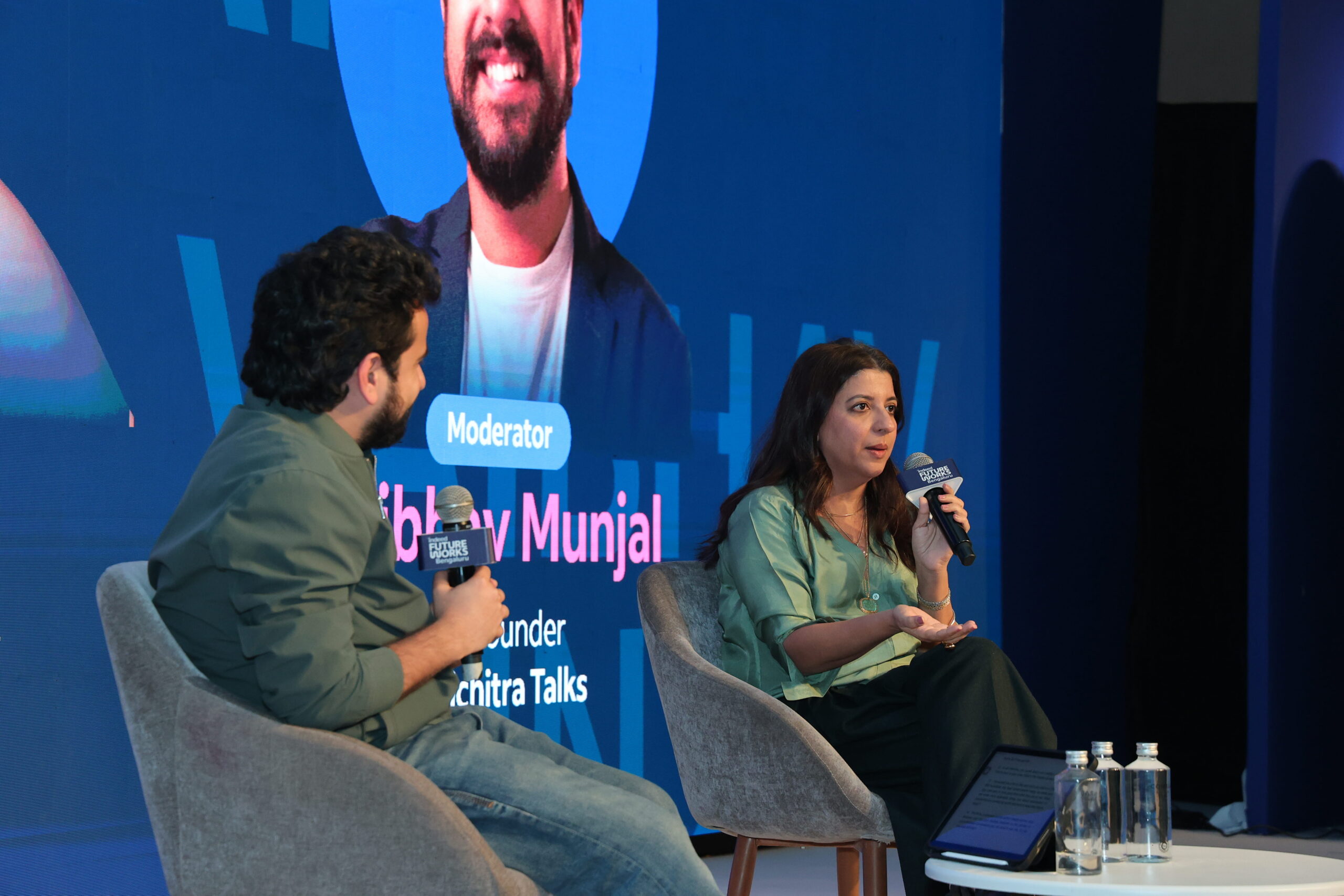
Post a JobAt Indeed Futureworks Bengaluru, filmmaker Zoya Akhtar brought an unexpected lens to conversations about talent, culture, and leadership. Known for films like Zindagi Na Milegi Dobara, Gully Boy, and Luck by Chance, Zoya has spent her career assembling teams of artists, technicians, and performers, each bringing their own discipline, ego, and creative vision to collaborative projects.
For HR and talent acquisition leaders, her insights offer a masterclass in what it really takes to build high-performing teams: the diplomat skills required to manage diverse personalities, the courage to prioritise talent over personal opinions, and the understanding that culture isn't enforced through hierarchy, it's cultivated through care.
The Art of Casting Beyond the Screen
When asked about her approach to casting, not just actors, but the crew members who make films possible, Zoya was clear: "If you get the correct person for the job, for that particular job, your battle is won."
This distinction matters for Indian talent leaders who often focus solely on technical qualifications. Zoya's framework suggests something deeper: recognise the artistry in every role. Her process includes filtering, having casting directors and department heads pre-screen candidates, followed by personal interviews where she assesses not just capability but chemistry. "When I interview people, I kind of get a sense of, you know, is this going to gel or not?"
But here's where it gets interesting for HR professionals: Zoya doesn't let personal preference override professional judgment. "Sometimes I may not like the person, but I know their work is perfect for this particular film. So I will bite the bullet and work with them. Because to me, the film is more important than my next three months, I'll manage."
This willingness to separate personal compatibility from professional excellence is rare. Most organisations optimise for "culture fit". Zoya's approach is more sophisticated: hire for excellence, then manage the relationship accordingly.
Diplomat Skills: The Hidden Leadership Competency
When asked how she navigates working with difficult people, Zoya offered one of the session's most valuable insights: "I've come to this conclusion as a filmmaker because I work with so many, like you have 200 people on your set, there's no one-size-fits-all."
She continued: "Some people, you need to set boundaries with. You know, you have to be polite and firm and set a boundary. There are some people that you just have to speak to them really sweetly, and they feel like they are saving the day, and that works. Some people so each one has their own psychology. You can't have one kind of behaviour with everybody."
"If you're in leadership, you have to have diplomatic skills."
- Zoya Akhtar, Filmmaker
For Indian HR leaders managing diverse, multi-generational teams across regions and cultures, this framework is transformative. Stop looking for the "right" management style. Instead, develop the ability to read people and adapt your approach accordingly. Some team members need clear boundaries. Others need to feel heroic. Some respond to direct feedback. Others need encouragement first.
The skill isn't in having one perfect leadership style, it's in being fluid enough to meet people where they are.
Culture: Enforced or Cultivated?
Zoya is deeply particular about culture, but not in the ways many organisations are. She doesn't care about ping-pong tables or beer Fridays. She cares about respect, safety, and cleanliness.
"My work culture, firstly there's a work ethic. I don't like, see, we already have an inbuilt hierarchy in the way we work. There's the director, there's the producer, there are the actors, they come top of the rung, then it's the first AD, the cameraman, you know, we already have that built in. There is no need to impose that."
Her philosophy: "Be civil, be polite. I think it's very important. My job requires teamwork. I require people to feel ownership of the movie. They have to believe it's their film. And it has to be treated like that. They have to be given that value because only when people own it, they give you their best."
This is the unlock for engagement that many organisations miss. Ownership isn't created through stock options or mission statements. It's created by giving people genuine agency and treating their contributions as essential.
Authenticity: The Truth in Your Work
One of the session's most powerful moments came when Zoya discussed authenticity in storytelling, advice that applies directly to employer branding and organisational communication.
"I think you have to put your inner truth in it. You have to put how you see it. You cannot think about what other people will think or what is working or what is not working. The more specific it is to your experience, the more it will resonate with people."
For HR leaders struggling with employer branding and recruitment marketing, this is the insight: stop trying to appeal to everyone. Stop using generic language about "dynamic teams" and "innovative culture." Put your actual truth out there. Show what working at your organisation really feels like. The specificity is what creates connection.
Leadership Lessons from the Set
Throughout the conversation, Zoya shared practical leadership wisdom gained from years of directing:
On public criticism: "Don't shout at people publicly. Take people aside and tell them whatever you need to. Don't shout at them in front of people. It's humiliating. People don't forget that stuff."
On receiving feedback: "You have to be open and you have to be, like, I look at it as greedy. The minute I feel like this can make my work better, this is correct. Or more than one person is saying this, even if I didn't think there was a problem, but if more than one person is saying it, then there must be a problem, let me re-examine it."
On talent versus likability: "Get the best person for the job. And unless they're really abusing you or have kidnapped your dog or something unforgivable, I understand. But otherwise, put personal things aside, and if the person is good for the job, make it work."
On managing artistic personalities: "Those people that actually genuinely have talent and artistic talent come with a little bit of crazy. So handle them with love."
The "One for Love" Philosophy
Before closing, Zoya shared a small practice that reveals her entire leadership philosophy. On set, after getting the perfect take, most directors shoot "one for safety", an insurance shot in case something was wrong with the original.
Zoya changed the language: "I just don't like that notion of let's do a safety. It comes from a place of fear, it comes from a place of insecurity and I feel the actors don't respond well to it. So I just started saying, we're doing one more and we're doing one for love."
The shift in framing changes everything. "Suddenly everybody just fell freer. I think it works better with actors because they know they're free and they just enjoy that take."
Fear produces protection. Love produces freedom. When teams feel they're working from love rather than fear, they give you their best.
Zoya Akhtar's approach to building high-performing creative teams offers a blueprint for HR leaders rethinking how culture, authenticity, and care intersect in the workplace. Want to dive deeper into how great leaders are reshaping the future of work?
Explore more from Indeed Insights:
- Discover insights from global thought leaders on talent strategy and organisational culture
- Read the latest research on what drives employee engagement and retention
- Access case studies for building more authentic employer brands
Ready to get started?
Post a JobGet insights and inspiration for the modern world of work
We’ll be in touch soon with the insights and inspiration you need to lead a thriving workforce.
Submit

